Overview
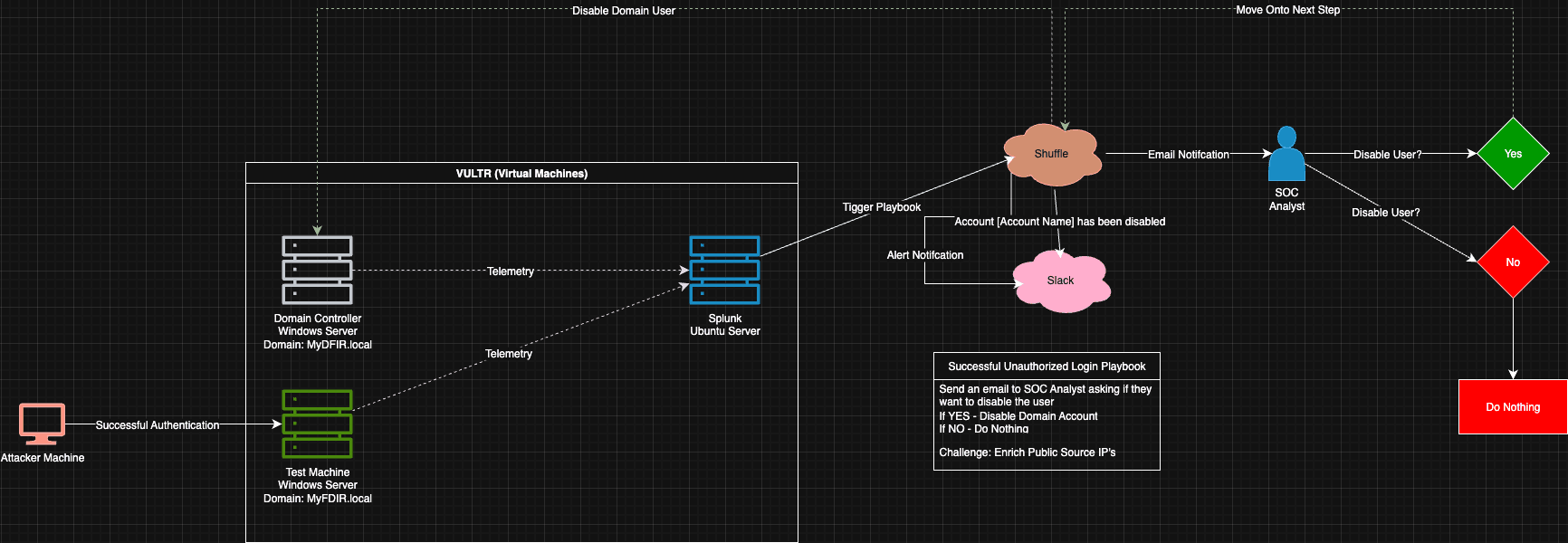
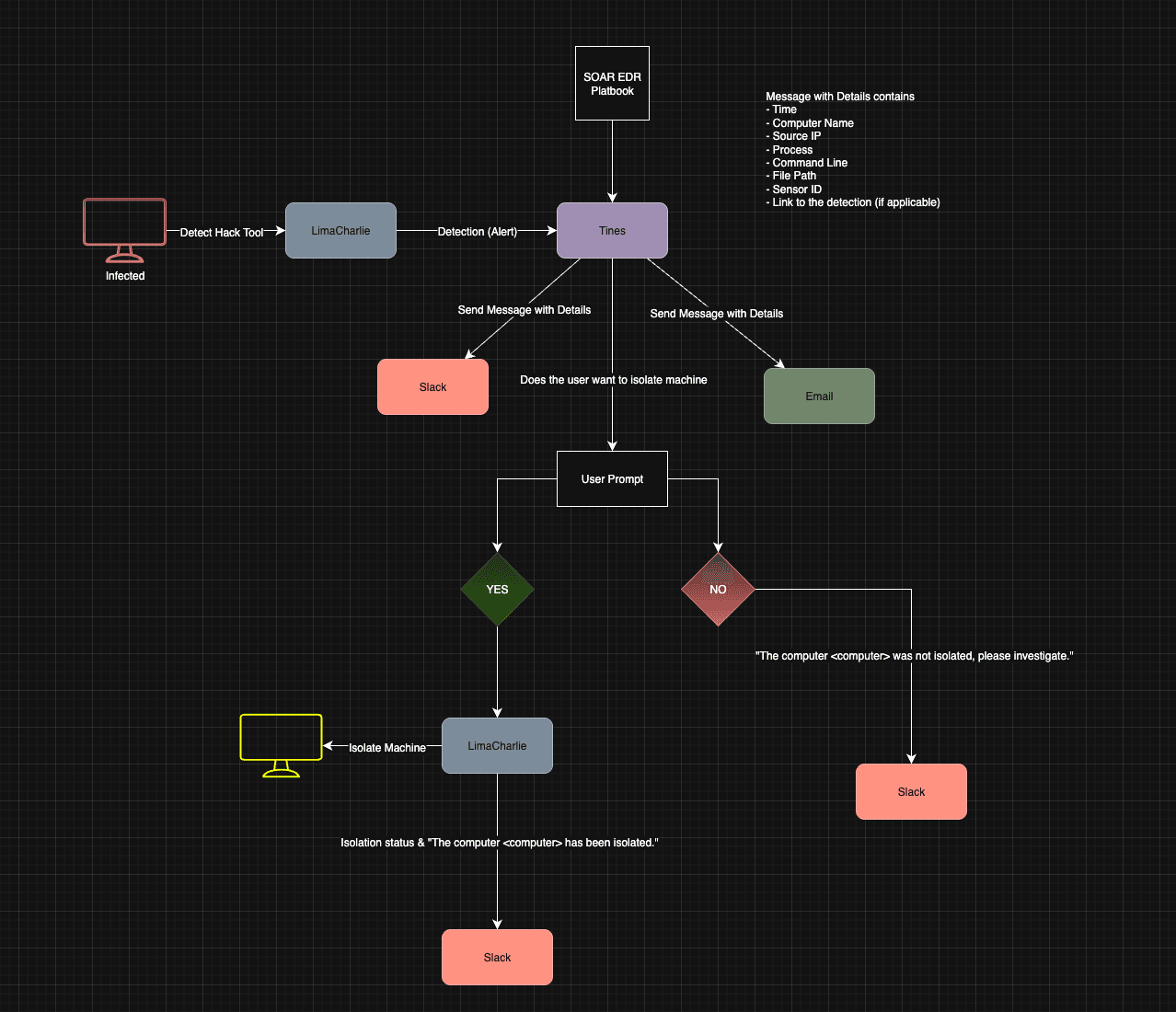
Modern SOC environments rely on automation to reduce response times without removing analyst oversight. This workflow merges EDR telemetry, SOAR orchestration, and analyst decision gates to achieve both speed and control in containment.
Key Features
-
Detection-to-isolation pipeline:
- A detection event in LimaCharlie (credential-dump activity) is streamed to Tines via webhook for automation.
- Tines builds and sends:
- A formatted Slack alert with detection details (host, IP, user, file path, command line).
- A styled HTML email summary to the analyst for context.
- An approval prompt (Yes/No) to decide whether to isolate the host.
- On “Yes,” the workflow calls the LimaCharlie API to isolate the machine, then confirms success in Slack.
-
Human-in-the-loop SOAR design:
- Prevents false positives by ensuring analysts manually authorize containment.
- Tracks analyst decisions through structured response logging in Tines.
-
Slack integration:
- Slack API sends both initial detection alerts and isolation status updates.
- Custom formatted messages display:
Title: MyDFIR - HackTool - LaZagne Computer: mydfir-soar-edr Source IP: 149.28.234.5 File Path: C:\Users\Administrator\Downloads\LaZagne.exe Command Line: "C:\Users\Administrator\Downloads\LaZagne.exe" - Automated follow-ups confirm:
- ✅ “Isolation: true — endpoint successfully isolated.”
- ⚠️ “Not isolated — analyst review required.”
-
EDR rules in LimaCharlie:
- Custom D&R rule detects LaZagne usage via:
- File path ending with LaZagne.exe
- Command line containing “LaZagne”
- Known SHA256 hash match
- Automatically reports to the org detection stream for webhook forwarding.
- Custom D&R rule detects LaZagne usage via:
-
Email alert templating:
- Designed a custom HTML email (Abouelfaid SOAR-EDR template) for clean incident reporting:
- Includes title, host, IP, file path, command line, sensor ID, and direct detection link.
- Styled with consistent colors and spacing for professional presentation.
- Designed a custom HTML email (Abouelfaid SOAR-EDR template) for clean incident reporting:
-
Isolation verification:
- Tines retrieves and displays the isolation status via API after the action completes.
- Validation confirmed by “General failure” in ping tests and Isolated status in LimaCharlie dashboard.
Technologies Used
- EDR Platform: LimaCharlie (agent installation, D&R rules, isolation API).
- SOAR Orchestration: Tines (webhook ingestion, conditional branching, runtime variables).
- Communication Tools: Slack API (chat.postMessage), Gmail SMTP (HTML email delivery).
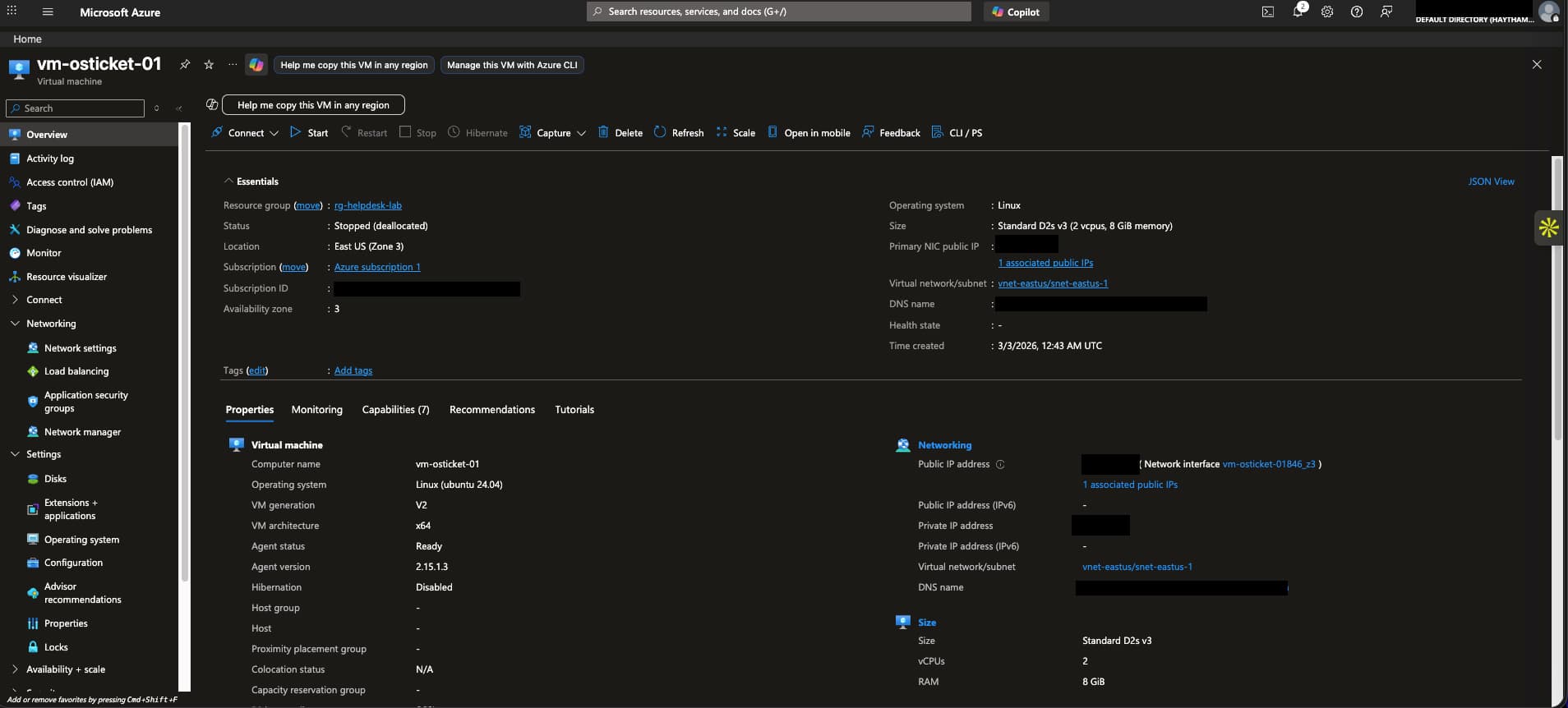
- OS & VM Environment: Windows 11 VM (test endpoint), LimaCharlie agent (x64), Vultr cloud network.
- Programming & Formatting: JSON payloads, HTML/CSS for emails, conditional expressions in Tines.
- Detection Simulation: LaZagne credential-dump tool executed on test endpoint to trigger workflow.
Challenges and Learnings
-
API authentication:
- Resolved token expiry (invalid jwt) by switching from temporary JWTs to long-lived org API keys.
-
Conditional workflow branching:
- Designed parallel Yes/No isolation flows with unified post-action logging.
-
Slack formatting:
- Adjusted JSON formatting for consistent line breaks and color-coded message sections.
-
Email formatting:
- Built responsive HTML templates compatible with Gmail and Outlook rendering engines.
-
Webhook validation:
- Tested payload handling with nested JSON fields to ensure correct variable resolution in Tines.
Creating a robust detection-to-containment pipeline requires more than automation — it demands integration accuracy, API reliability, and clear human oversight. Each component (EDR, SOAR, Slack, Email) must synchronize to deliver a secure, verifiable incident workflow.
Outcome
-
Operational workflow:
- Detection → Alert → Approval → Isolation → Confirmation all executed automatically within seconds.
- Analyst decision captured via form and validated in real-time.
-
SOC value:
- Demonstrates a fully orchestrated incident response loop — detection in LimaCharlie, decision-making in Tines, and containment through automation.
- Reduces MTTR by eliminating manual steps while maintaining analyst governance.
-
Next steps:
- Add enrichment using IP reputation and threat intel APIs before isolation.
- Implement multi-alert correlation to reduce noise.
- Extend automation to include un-isolation workflows for post-incident recovery.