Overview
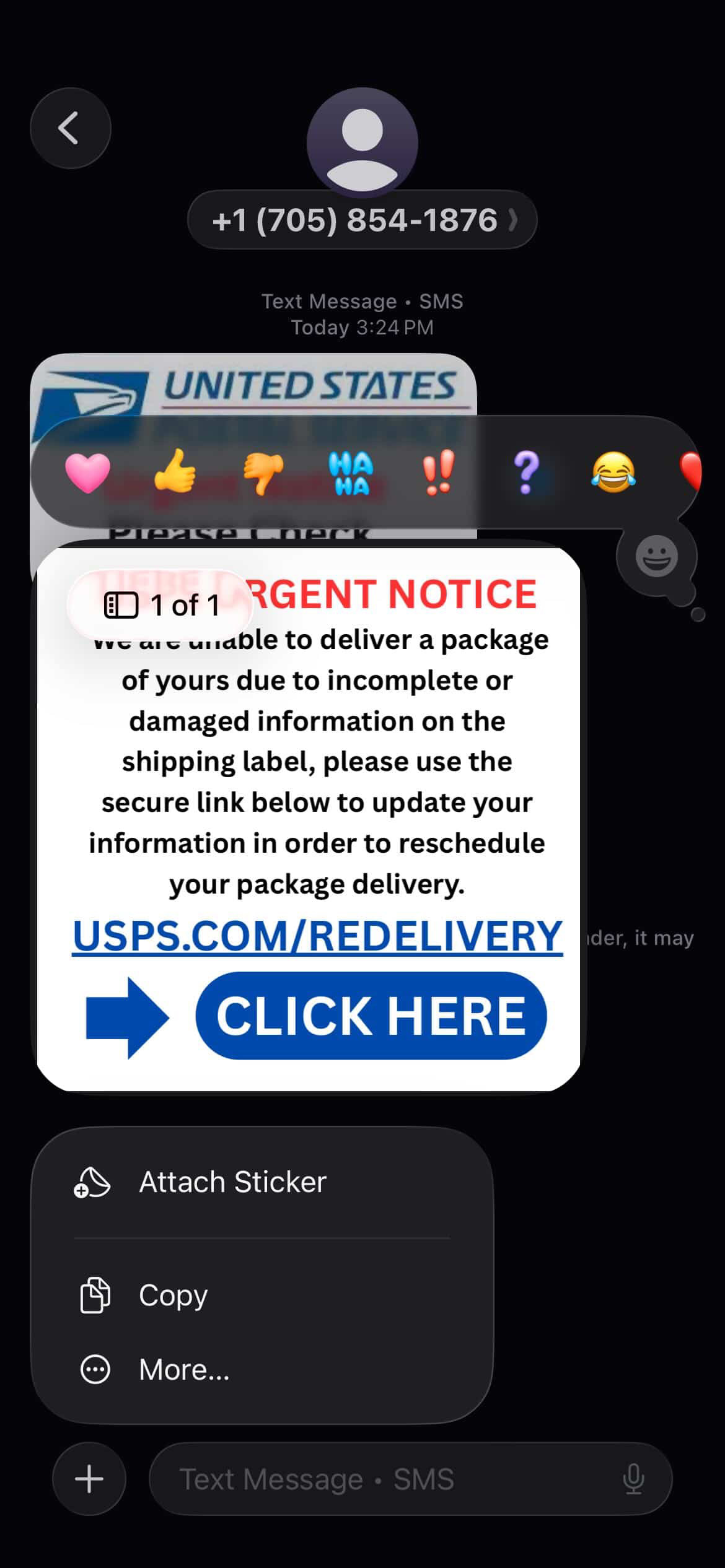
Original Smishing Message
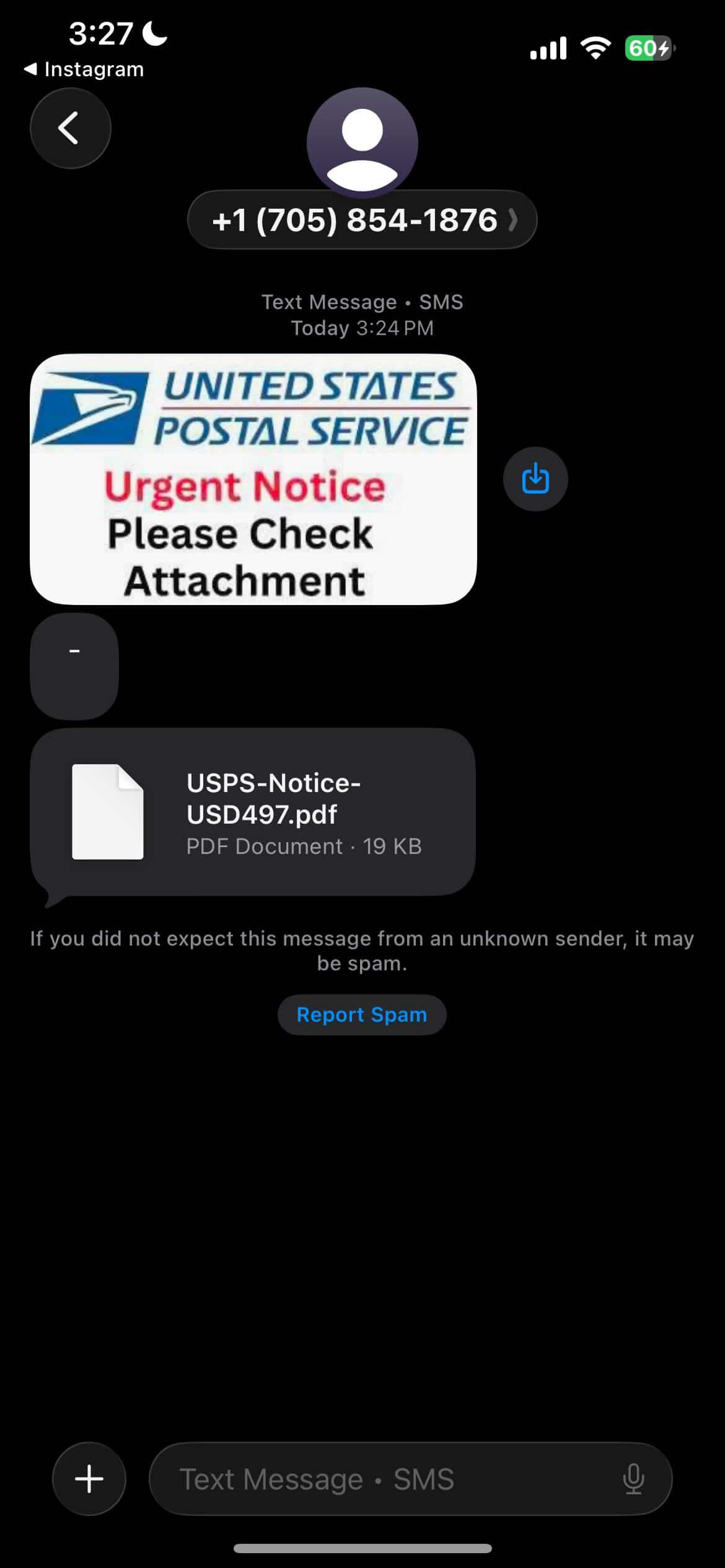 The message impersonates USPS and claims that a package delivery failed due to incomplete shipping information. It urges the recipient to click a link to resolve the issue.
This tactic is commonly used in delivery-themed smishing campaigns to create urgency and trick users into interacting with malicious links.
Malicious Attachment Reference
 Attackers often include fake shipping notices or invoices disguised as PDF documents to increase credibility and pressure the recipient to open the file.
Opening such attachments on a normal system can lead to:
- Credential theft
- Malware execution
- Data exfiltration
- Device compromise
Smishing Campaign Analysis
- Unknown sender phone number
- Brand impersonation (USPS)
- Urgent delivery failure message
- Call-to-action link
- Attachment reference
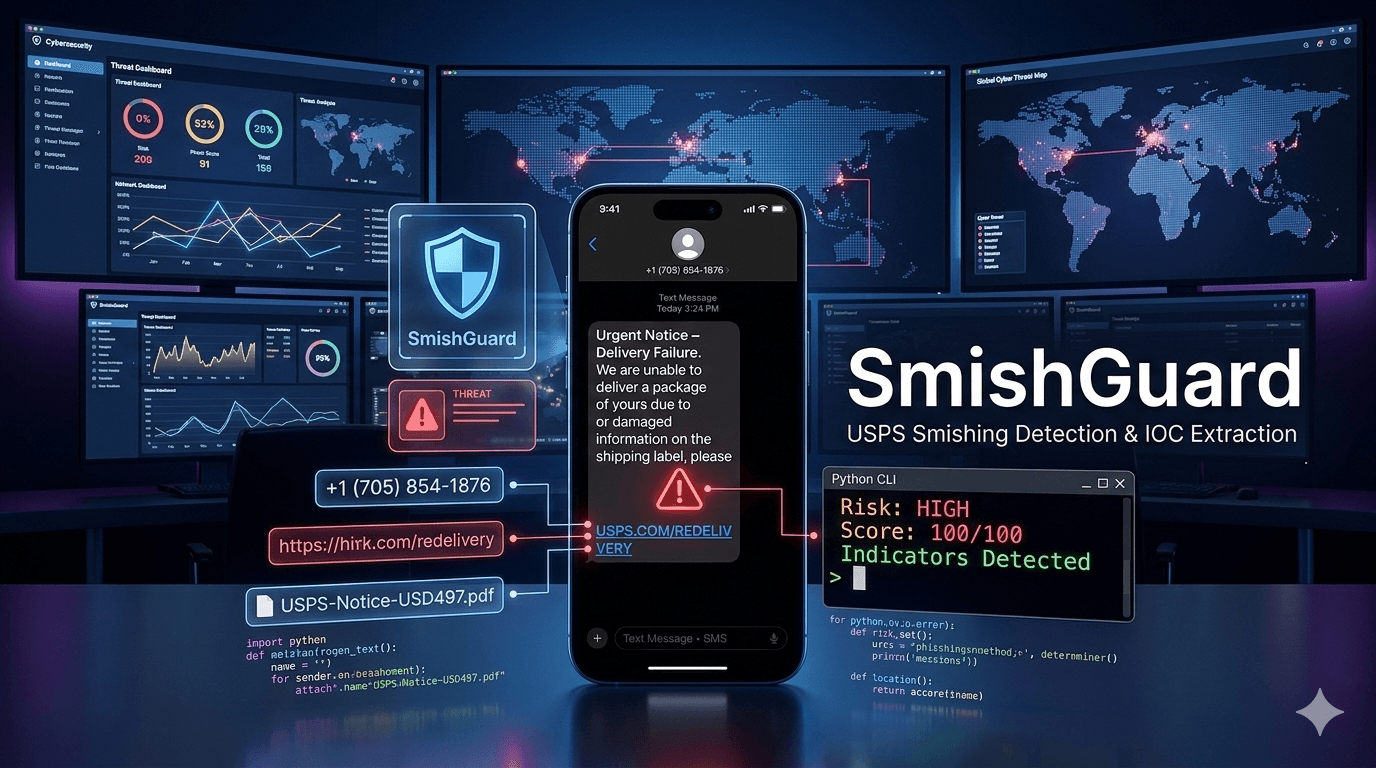
SmishGuard CLI Tool
- Phone numbers
- URLs
- Domains
- Attachment references
Indicators of Compromise (IOCs)
Incident Response Documentation
- Incident report template
- IOC documentation
- Evidence screenshots
- Risk assessment and mitigation recommendations
Safe Attachment Handling
Detection Engineering
- "Urgent Notice"
- "Unable to deliver"
- "USPS"
- "Redelivery"
- "Click here"
- SIEM detection queries
- SMS or email security filters
- Threat hunting workflows
Testing & Continuous Integration
- pytest
- Ruff
- GitHub Actions
Technologies Used
- Phishing analysis
- Indicator of Compromise extraction
- Detection engineering (Sigma)
- Python
- Regex parsing
- CLI tooling
- GitHub Actions
- pytest
- Ruff
Outcome
- Developed a Python-based smishing triage tool.
- Extracted and documented real-world phishing indicators.
- Created structured incident response documentation.
- Implemented a Sigma detection rule for similar campaigns.
- Built automated tests and CI pipelines for reliability.
- Published the full investigation and tool on GitHub.